

Hey there! As a supplier of PBAT, PLA, and corn starch, I often get asked about the anti - glare properties of these materials. So, let's dive right in and explore what makes them tick in terms of reducing glare.
First off, let's talk a bit about what PBAT, PLA, and corn starch are. PBAT, or Polybutylene Adipate Terephthalate, is a biodegradable copolymer that's pretty versatile. It's often used in packaging and other applications where a certain level of flexibility and durability is needed. PLA, or Polylactic Acid, is derived from renewable resources like corn starch or sugarcane. It's known for its good mechanical properties and is also biodegradable. Corn starch, well, it's a natural polymer that's been used in various industries for ages, and it's a key raw material for making PLA. You can find more about these biodegradable materials on our website: Biodegradable Resin and Biodegradable Material. If you're specifically interested in PBAT PLA Corn Starch, click on the link.
Anti - glare properties of PBAT
PBAT has some interesting anti - glare characteristics. One of the main factors contributing to its anti - glare ability is its surface roughness. When PBAT is processed, the surface can be engineered to have a certain degree of micro - roughness. This micro - roughness scatters light rays that hit the surface. Instead of light reflecting off the surface in a single, direct direction (which causes glare), it gets scattered in multiple directions.
For example, in applications like PBAT - based films used for packaging, this anti - glare property can be really useful. When you're looking at a product on a store shelf, a packaging film with good anti - glare properties won't blind you with reflections from the store lights. It allows you to clearly see the product inside the package.
Another aspect is the refractive index of PBAT. The refractive index determines how light bends when it enters the material. PBAT has a refractive index that can be adjusted during the manufacturing process. By carefully controlling the refractive index, we can reduce the amount of specular reflection (the type of reflection that causes glare). This is especially important in applications where optical clarity is also required, such as in some types of transparent PBAT products.
Anti - glare properties of PLA
PLA also has its own set of anti - glare features. Similar to PBAT, surface modification plays a big role. We can use different processing techniques to create a micro - textured surface on PLA products. This micro - texture diffuses light, reducing glare.
One of the advantages of PLA in terms of anti - glare is its high transparency. When combined with proper anti - glare treatment, it can create a product that offers both clear visibility and reduced glare. For instance, in PLA - based display screens or covers, the anti - glare property ensures that users can view the content without being distracted by reflections.
The molecular structure of PLA also contributes to its anti - glare performance. The arrangement of polymer chains in PLA can affect how light interacts with the material. By optimizing the molecular orientation during processing, we can enhance the anti - glare effect. This is achieved through processes like stretching or annealing, which align the polymer chains in a way that scatters light more effectively.
Anti - glare properties of corn starch
Corn starch is a natural and renewable material, and it too has anti - glare potential. When used in composite materials with PBAT or PLA, corn starch can influence the overall anti - glare performance.
One of the ways corn starch helps is by acting as a filler. When incorporated into a polymer matrix like PBAT or PLA, it can change the surface morphology of the final product. The presence of corn starch particles can create a more irregular surface, which scatters light.
Corn starch also has a relatively low refractive index compared to some synthetic polymers. When combined with other materials, it can help to balance the overall refractive index of the composite, reducing specular reflection. In addition, corn starch is often hydrophilic, which means it can absorb a small amount of moisture. This moisture layer on the surface can also contribute to light scattering, further enhancing the anti - glare effect.
Applications of these anti - glare materials
The anti - glare properties of PBAT, PLA, and corn starch make them suitable for a wide range of applications.
In the packaging industry, as mentioned earlier, anti - glare films made from these materials can improve the visibility of products on store shelves. This is especially important for high - end products where a clear view of the product is crucial for attracting customers.
In the electronics industry, PBAT, PLA, and their composites can be used for display screens, covers, and other components. The anti - glare property ensures that users can comfortably view the screen without being bothered by reflections from ambient light.
In the automotive industry, these materials can be used for interior components such as dashboard covers and displays. Reducing glare in the car interior enhances the driving experience by reducing distractions.
Factors affecting anti - glare performance
There are several factors that can affect the anti - glare performance of PBAT, PLA, and corn starch - based materials.
Processing conditions play a huge role. The temperature, pressure, and speed during manufacturing can all influence the surface morphology and molecular structure of the materials. For example, if the processing temperature is too high, it may cause the surface to become smoother, reducing the anti - glare effect.
Additives also have an impact. Some additives can be used to enhance the anti - glare property. For instance, anti - blocking agents can create a micro - rough surface, while light - scattering agents can further improve the light - scattering ability of the material.
The thickness of the material is another factor. Thicker materials may have different anti - glare characteristics compared to thinner ones. In some cases, a thicker layer may provide more opportunities for light to be scattered within the material, but it also needs to be balanced with other properties such as transparency.
Comparing the anti - glare performance
When comparing the anti - glare performance of PBAT, PLA, and corn starch, it's important to note that each material has its own strengths.
PBAT offers good flexibility and durability along with anti - glare properties. It's suitable for applications where the material needs to withstand some mechanical stress while still reducing glare.
PLA provides high transparency and can be easily processed into different shapes. Its anti - glare performance can be fine - tuned through various processing techniques, making it a good choice for optical applications.
Corn starch, being a natural and renewable material, adds an eco - friendly aspect to the anti - glare solution. When used in composites, it can enhance the anti - glare effect while also reducing the cost and environmental impact.
Conclusion
In conclusion, PBAT, PLA, and corn starch all have unique anti - glare properties that make them valuable in a variety of applications. Whether it's in packaging, electronics, or automotive industries, these materials offer a sustainable and effective solution to reduce glare.
As a supplier of PBAT, PLA, and corn starch, we're constantly working on improving the anti - glare performance of our products. We use the latest manufacturing techniques and research to ensure that our materials meet the highest standards.

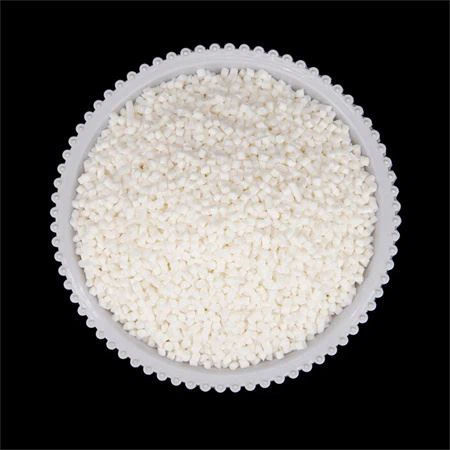
If you're interested in using these anti - glare materials for your products, I encourage you to get in touch with us. We can discuss your specific requirements and provide you with samples to test. You can find more information about our PBAT PLA Corn Starch on our website. Let's work together to create innovative and sustainable solutions with these amazing materials.
References
- "Biodegradable Polymers: Principles and Practice" by R. Auras, L. Harte, and S. Selke.
- "Polymer Science and Technology" by J. A. Brydson.
- Various research papers on the properties and applications of PBAT, PLA, and corn starch in scientific journals.