

Hey there! As a supplier of biodegradable resin, I often get asked about the biodegradation products of these amazing materials. So, I thought I'd take a moment to break it down for you.

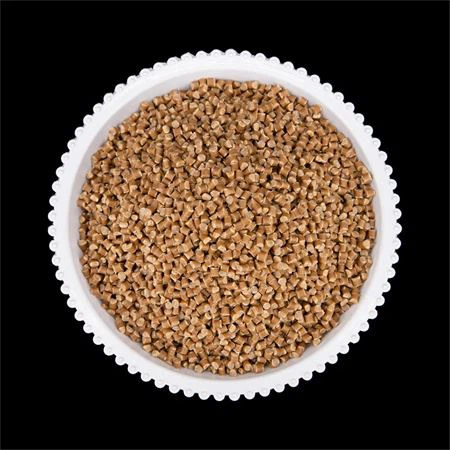
Let's start with the basics. Biodegradable resins are designed to break down naturally in the environment over time. This is a huge advantage over traditional plastics, which can take hundreds of years to decompose and often end up polluting our oceans, landfills, and ecosystems.
One of the most common types of biodegradable resin is PLA (Polylactic Acid). PLA is made from renewable resources like corn starch or sugarcane. When PLA undergoes biodegradation, it breaks down into lactic acid. Lactic acid is a natural compound that is found in many living organisms. It's relatively harmless and can be further broken down by microorganisms in the environment.
Another popular biodegradable resin is PBS (Polybutylene Succinate). PBS is a synthetic polyester that is also biodegradable. During the biodegradation process, PBS breaks down into succinic acid and 1,4 - butanediol. Succinic acid is a dicarboxylic acid that occurs naturally in living organisms, and it can be used as a building block for other chemicals. 1,4 - butanediol is a colorless viscous liquid that can also be metabolized by microorganisms.
Now, many of our products are blends of different biodegradable resins. For example, our PLA PBS Blends combine the properties of PLA and PBS. When these blends biodegrade, you'll get a mix of the degradation products of both resins. The lactic acid from PLA and the succinic acid and 1,4 - butanediol from PBS will be present in the environment as the blend breaks down.
PLA PBS is another great option. It offers a balance between the performance and biodegradability of the two resins. The degradation process of PLA PBS is similar to the blend. The two resins break down independently, releasing their respective degradation products into the environment.
Then there's our PBAT PLA Corn Starch product. PBAT (Polybutylene Adipate Terephthalate) is a biodegradable copolyester. When PBAT degrades, it breaks down into adipic acid, terephthalic acid, and butanediol. In our PBAT PLA Corn Starch blend, the corn starch will also break down into simple sugars like glucose. These sugars are easily consumed by microorganisms in the soil or water.
The biodegradation of these resins usually occurs in the presence of microorganisms such as bacteria and fungi. These microorganisms secrete enzymes that break down the polymer chains of the biodegradable resins into smaller molecules. The smaller molecules are then taken up by the microorganisms as a source of energy and carbon.
The rate of biodegradation depends on several factors. One of the most important factors is the environment. Biodegradation occurs much faster in aerobic environments (where there is oxygen) than in anaerobic environments (where there is little or no oxygen). For example, in a composting facility, the high temperature, moisture, and oxygen levels create ideal conditions for the rapid biodegradation of our resins.
The presence of other substances in the environment can also affect the biodegradation rate. For instance, if the soil or water contains a high concentration of heavy metals or other pollutants, it may inhibit the growth and activity of the microorganisms responsible for biodegradation.
The physical form of the biodegradable resin also matters. A thin film of biodegradable resin will biodegrade faster than a thick block of the same material because the microorganisms have more surface area to attack.
As a supplier, we're committed to providing high - quality biodegradable resins that not only perform well in various applications but also break down safely and efficiently in the environment. Our products are used in a wide range of industries, including packaging, agriculture, and disposable consumer goods.
If you're in the market for biodegradable resins, whether it's for a small - scale project or a large - scale industrial application, we'd love to talk to you. Our team of experts can help you choose the right product based on your specific needs, such as the desired biodegradation rate, mechanical properties, and cost.
Contact us to start a conversation about your biodegradable resin requirements. We're here to assist you every step of the way, from product selection to technical support. Let's work together to make our world a cleaner and more sustainable place with the use of our biodegradable resins.
References:
- "Biodegradable Polymers and Sustainable Development" by some well - known polymer scientists.
- "Microbial Degradation of Synthetic Polymers" from a leading environmental microbiology journal.
- Various research papers on the biodegradation of PLA, PBS, PBAT, and their blends published in polymer science and environmental science journals.