

Can compostable garbage bags be used for food waste? This is a question that many environmentally - conscious consumers and businesses often ask. As a supplier of Compostable Garbage Bags, I'm here to provide a comprehensive answer based on scientific facts and practical experience.
Understanding Compostable Garbage Bags
Compostable garbage bags are designed to break down under specific composting conditions. Unlike traditional plastic bags that can take hundreds of years to decompose, compostable bags are made from natural materials such as plant - based polymers like polylactic acid (PLA), starch, or cellulose. These materials are biodegradable, which means they can be broken down by microorganisms into water, carbon dioxide, and biomass.
The main advantage of using compostable garbage bags is their environmental friendliness. They reduce the amount of plastic waste that ends up in landfills, oceans, and other natural habitats. Many compostable bags are certified to meet international standards such as ASTM D6400 (in the United States) or EN 13432 (in Europe), which ensure that they will break down within a certain time frame under industrial composting conditions.
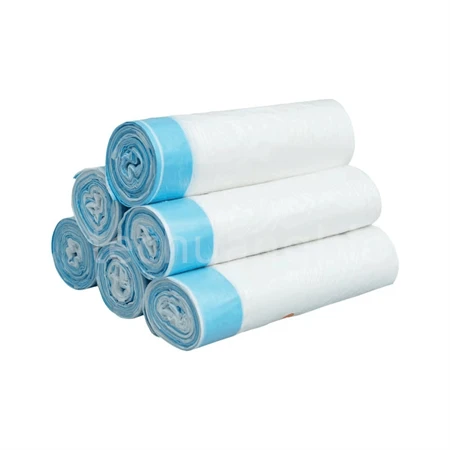

Using Compostable Garbage Bags for Food Waste
Now, let's address the core question: Can compostable garbage bags be used for food waste? The answer is yes, and there are several good reasons for doing so.
Hygiene and Convenience
One of the primary benefits of using compostable garbage bags for food waste is hygiene. Food waste can be messy and smelly, and a sturdy compostable bag can contain the waste effectively, preventing leaks and spills. It also makes it easier to handle and transport food waste, whether you're taking it from your kitchen to a home compost bin or to a municipal composting facility.
For example, if you're collecting food scraps from your daily cooking, such as vegetable peels, fruit cores, and leftover cooked food, a Compostable Garbage Bag can keep everything in one place. You can simply tie up the bag and place it in your composting system without having to worry about the food waste sticking to your hands or other surfaces.
Composting Process
When you use a compostable bag for food waste, the bag will eventually break down along with the food scraps. In a well - managed composting environment, the microorganisms that break down the food waste will also start to decompose the bag. This means that you don't have to remove the bag before adding the food waste to the compost pile.
However, it's important to note that the composting conditions need to be right. Industrial composting facilities typically have the ideal temperature, moisture, and oxygen levels to break down compostable bags quickly. In a home composting setup, it may take a bit longer, but as long as the compost pile is turned regularly and maintained at the proper moisture level, the bag should still decompose over time.
Environmental Impact
Using compostable garbage bags for food waste further reduces the environmental impact of waste management. By diverting food waste from landfills, you're preventing the production of methane, a potent greenhouse gas that is released when organic waste decomposes anaerobically (without oxygen) in landfills. Instead, the food waste and the compostable bag are turned into nutrient - rich compost that can be used to improve soil quality in gardens and farms.
Considerations When Using Compostable Garbage Bags for Food Waste
While compostable garbage bags are a great option for food waste, there are a few things to keep in mind.
Composting Conditions
As mentioned earlier, the composting conditions play a crucial role in the decomposition of compostable bags. Industrial composting facilities are designed to break down these bags efficiently, usually within 90 - 180 days. Home composting systems may not reach the same high temperatures and optimal conditions as industrial facilities, so the decomposition process may be slower.
If you're using a home compost bin, make sure to keep the compost pile well - aerated by turning it regularly. Also, maintain the right moisture level, similar to a damp sponge. If the compost pile is too dry, the decomposition process will slow down; if it's too wet, it can become anaerobic and produce unpleasant odors.
Bag Quality
Not all compostable garbage bags are created equal. Some lower - quality bags may not break down as easily or may contain additives that can slow down the decomposition process. As a supplier, we ensure that our Biodegradable Drawstring Garbage Bag and Biodegradable Garbage Bag Small meet the highest quality standards. We use only the purest plant - based materials and avoid any harmful additives that could affect the composting process.
Compatibility with Local Composting Facilities
Before using compostable garbage bags for food waste, it's a good idea to check with your local municipal composting facility to see if they accept compostable bags. Some facilities may have specific requirements or restrictions. For example, they may only accept bags that are certified to a certain standard.
Conclusion
In conclusion, compostable garbage bags are an excellent choice for collecting and disposing of food waste. They offer hygiene, convenience, and environmental benefits. As long as you pay attention to the composting conditions, bag quality, and local regulations, you can use these bags with confidence.
If you're interested in purchasing high - quality compostable garbage bags for your food waste management needs, we'd love to hear from you. Our team is ready to assist you in finding the right products for your specific requirements. Whether you're a household, a restaurant, or a commercial establishment, we have a range of compostable garbage bags to suit your needs.
References
- ASTM International. (2023). Standard Specification for Labeling of Plastics Designed to be Aerobically Composted in Municipal or Industrial Facilities (ASTM D6400).
- European Committee for Standardization. (2000). Packaging - Requirements for packaging recoverable through composting and biodegradation - Test scheme and evaluation criteria for the final acceptance of packaging (EN 13432).
- Environmental Protection Agency. (2023). Food: Material-Specific Data. Retrieved from https://www.epa.gov/facts - figures - about - materials - waste - and - recycling/food - material - specific - data