

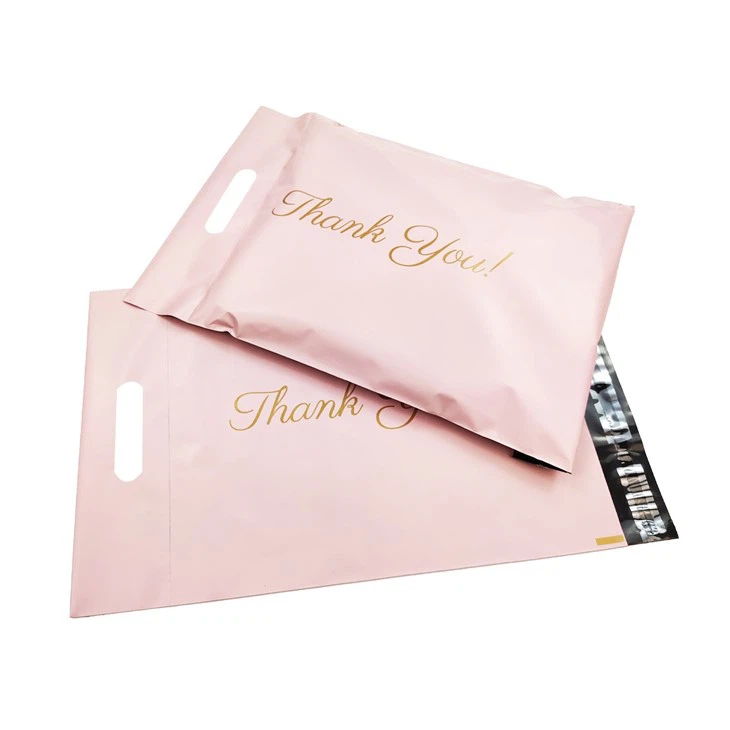
As a supplier of biodegradable mailers, I often receive inquiries from customers about the various properties of our products. One question that comes up frequently is whether biodegradable mailers have good UV resistance. In this blog post, I'll delve into this topic, exploring the science behind UV resistance in biodegradable mailers and how it impacts their performance.

Understanding UV Radiation and Its Effects
UV radiation is a form of electromagnetic radiation emitted by the sun. It's divided into three types: UVA, UVB, and UVC. UVC is mostly absorbed by the Earth's atmosphere and doesn't reach the surface. However, UVA and UVB can penetrate the atmosphere and cause damage to various materials, including plastics.
When plastics are exposed to UV radiation, several things can happen. The UV rays can break the chemical bonds in the plastic polymers, leading to a process called photodegradation. This can cause the plastic to become brittle, crack, and lose its strength and integrity. For mailers, this means that they may tear more easily, compromising the protection of the contents inside.
Biodegradable Mailers: A Sustainable Alternative
Biodegradable mailers are an environmentally friendly alternative to traditional plastic mailers. They are designed to break down naturally over time, reducing the amount of plastic waste that ends up in landfills and the environment. These mailers are typically made from materials such as polylactic acid (PLA), polyhydroxyalkanoates (PHA), or other biodegradable polymers.
However, the very nature of biodegradability means that these materials are often more susceptible to environmental factors, including UV radiation. Unlike traditional plastics, which can take hundreds of years to break down, biodegradable materials are engineered to degrade relatively quickly under the right conditions. This also means that they may be more prone to UV-induced degradation.
UV Resistance in Biodegradable Mailers
The UV resistance of biodegradable mailers can vary depending on several factors, including the type of material used, the thickness of the mailer, and any additives or coatings applied to enhance UV protection.
Material Type
Different biodegradable polymers have different levels of inherent UV resistance. For example, PLA is a commonly used material in biodegradable mailers. It has some natural resistance to UV radiation, but it can still be affected over time. PHA, on the other hand, may offer better UV resistance in some cases, but it is also more expensive and less widely available.
Thickness
Thicker mailers generally have better UV resistance than thinner ones. This is because the additional material provides more protection against the penetration of UV rays. However, increasing the thickness also increases the cost and may reduce the flexibility of the mailer.
Additives and Coatings
To improve the UV resistance of biodegradable mailers, manufacturers may add UV stabilizers or apply protective coatings. UV stabilizers are chemicals that absorb or reflect UV radiation, preventing it from reaching the polymer chains in the mailer. Coatings can also provide a physical barrier against UV rays, as well as other environmental factors such as moisture and oxygen.
Testing and Performance
At our company, we conduct rigorous testing to ensure that our Biodegradable Mailer meet the highest standards of quality and performance. This includes testing for UV resistance.
We use accelerated weathering chambers to simulate long-term exposure to UV radiation. In these chambers, the mailers are exposed to high-intensity UV light for a specified period of time. After the exposure, we evaluate the physical properties of the mailers, such as their tensile strength, elongation at break, and appearance.
Our tests have shown that our biodegradable mailers have good UV resistance under normal conditions. However, it's important to note that the performance may vary depending on the specific application and the level of UV exposure. For example, mailers that are stored outdoors for extended periods of time or are exposed to direct sunlight may experience more significant degradation than those that are stored indoors.
Applications and Considerations
When choosing biodegradable mailers, it's important to consider the intended application and the level of UV exposure. Here are some scenarios to keep in mind:
Indoor Use
For mailers that are used primarily indoors, such as for shipping products within a warehouse or office environment, UV resistance may not be a major concern. Our biodegradable mailers are well-suited for these applications, providing reliable protection for your products while also being environmentally friendly.
Outdoor Use
If your mailers will be exposed to outdoor conditions, such as during transit or storage on a loading dock, UV resistance becomes more important. In these cases, you may want to consider using thicker mailers or mailers with added UV stabilizers or coatings. Our Personalized Poly Mailer can be customized with these features to meet your specific needs.
Long-Term Storage
For long-term storage, especially in areas with high levels of sunlight, it's important to take extra precautions to protect your mailers from UV damage. This may include storing them in a shaded area or using protective covers. Our 100 Compostable Mailer are designed to be durable and resistant to environmental factors, but proper storage is still essential to ensure their longevity.
Conclusion
In conclusion, biodegradable mailers can have good UV resistance, but it depends on several factors. By choosing the right material, thickness, and additives, you can ensure that your mailers provide reliable protection for your products while also being environmentally friendly.
At our company, we are committed to providing high-quality biodegradable mailers that meet the needs of our customers. Whether you need mailers for indoor or outdoor use, we have a range of options to choose from. If you have any questions or would like to discuss your specific requirements, please don't hesitate to contact us. We look forward to working with you to find the perfect solution for your shipping needs.
References
- ASTM International. (2023). Standard Practice for Operating Light-Exposure Apparatus (Fluorescent UV and Condensation Type) for Exposure of Nonmetallic Materials. ASTM G154-23.
- European Committee for Standardization. (2013). Plastics - Determination of the ultimate aerobic biodegradability and disintegration under controlled composting conditions - Method by analysis of evolved carbon dioxide. EN 13432:2000.
- Singh, S., & Sharma, S. (2008). Biodegradation of plastics: A review. Critical Reviews in Environmental Science and Technology, 38(4), 323-342.