

Hey there! I'm a supplier of PBAT, PLA, and corn starch. You might be wondering how corn starch fits into the production of PBAT and PLA. Well, let's dive right in and explore this interesting topic.
What are PBAT and PLA?
First off, let's quickly go over what PBAT and PLA are. PBAT, or Polybutylene Adipate Terephthalate, is a biodegradable polyester. It's known for its excellent flexibility and toughness, which makes it a great material for things like packaging films. On the other hand, PLA, or Polylactic Acid, is derived from renewable resources like corn starch or sugarcane. It's biodegradable and has good mechanical properties, making it suitable for a wide range of applications, from disposable cutlery to 3D printing filaments.
The Role of Corn Starch in PLA Production
Corn starch plays a crucial role in the production of PLA. The process starts with the extraction of starch from corn kernels. This starch is then broken down into simple sugars through a process called hydrolysis. These sugars are then fermented by bacteria to produce lactic acid.
The lactic acid is then polymerized to form PLA. The quality of the corn starch can have a significant impact on the final properties of the PLA. For example, if the corn starch has a high amylose content, it can lead to a more crystalline PLA, which has better mechanical strength. On the other hand, a lower amylose content can result in a more amorphous PLA, which is more flexible.
As a PBAT PLA Corn Starch supplier, I know how important it is to provide high-quality corn starch for PLA production. We carefully select our corn sources and use advanced processing techniques to ensure that our corn starch meets the strict requirements of the PLA manufacturers.
Corn Starch in PBAT Production
While corn starch is not a direct raw material for PBAT production, it can still play an important role in the overall process. One way is through the use of corn starch-based additives. These additives can improve the biodegradability and processing properties of PBAT.
For example, corn starch can be used to produce biodegradable fillers. These fillers can be added to PBAT to reduce the cost of the final product while still maintaining its biodegradability. Additionally, corn starch-based additives can improve the melt flow properties of PBAT, making it easier to process into different shapes and forms.
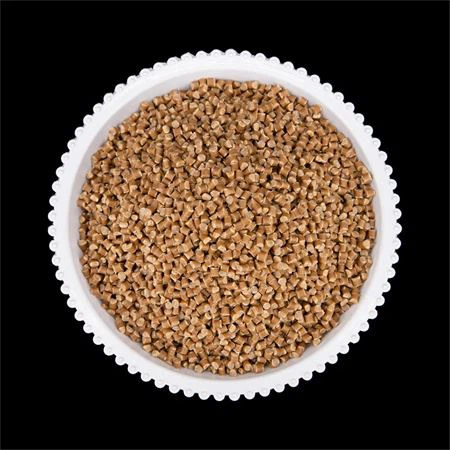

We offer a range of Pla Pbat Cornstarch products that are specifically designed for use in PBAT production. Our additives are formulated to provide the best balance of performance and cost, ensuring that our customers can produce high-quality PBAT products at a competitive price.
Advantages of Using Corn Starch in PBAT and PLA Production
There are several advantages to using corn starch in the production of PBAT and PLA. First and foremost, corn starch is a renewable resource. Unlike traditional petroleum-based plastics, which are derived from finite resources, corn starch can be replenished year after year. This makes PBAT and PLA more sustainable and environmentally friendly.
Secondly, the use of corn starch can reduce the cost of production. As mentioned earlier, corn starch can be used as a filler in PBAT, which can significantly reduce the amount of expensive PBAT resin needed. In the case of PLA, the use of corn starch as a raw material can also be more cost-effective compared to other feedstocks.
Finally, corn starch can improve the biodegradability of PBAT and PLA. Both PBAT and PLA are already biodegradable, but the addition of corn starch can further enhance this property. This means that products made from PBAT and PLA with corn starch additives will break down more quickly in the environment, reducing the amount of plastic waste.
Challenges and Solutions
Of course, there are also some challenges associated with using corn starch in PBAT and PLA production. One of the main challenges is the moisture sensitivity of corn starch. Corn starch can absorb moisture from the environment, which can affect the quality of the final product. To overcome this challenge, we use special drying and storage techniques to ensure that our corn starch products have a low moisture content.
Another challenge is the compatibility of corn starch with PBAT and PLA. Corn starch is a hydrophilic material, while PBAT and PLA are hydrophobic. This can make it difficult to disperse the corn starch evenly in the polymer matrix. To address this issue, we have developed special compatibilizers that can improve the compatibility between corn starch and PBAT/PLA.
Conclusion
In conclusion, corn starch plays a vital role in the production of PBAT and PLA. It offers many advantages, including sustainability, cost reduction, and improved biodegradability. As a PBAT PLA Corn Starch supplier, we are committed to providing high-quality corn starch products that meet the needs of our customers.
If you're in the business of producing PBAT or PLA products and are looking for a reliable corn starch supplier, we'd love to hear from you. Whether you need Pla Pbat Cornstarch for general use or PLA Material for specific applications, we have the expertise and products to meet your requirements. Contact us today to start a discussion about your procurement needs and let's work together to create more sustainable and high-quality products.
References
- Avérous, L., & Pollet, E. (2012). Biodegradable multiphase systems based on plasticized starch: a review. Journal of Materials Science, 47(4), 1547-1564.
- Garlotta, D. (2001). A literature review of poly(lactic acid). Journal of Polymers and the Environment, 9(2), 63-84.
- Lim, L. T., Auras, R., & Rubino, M. (2008). Processing technologies for poly(lactic acid). Progress in Polymer Science, 33(8), 820-852.