

Hey there! As a supplier of PBAT biodegradable products, I've been getting a lot of questions lately about the adhesion properties of PBAT. So, I thought I'd take a moment to share what I know and why it matters.
First off, let's talk about what PBAT is. PBAT, or polybutylene adipate terephthalate, is a biodegradable polyester that's commonly used in a variety of applications, from packaging to agricultural films. It's known for its excellent mechanical properties, such as flexibility and toughness, as well as its ability to degrade in the environment over time.
Now, onto the adhesion properties. Adhesion is the ability of a material to stick to another surface. In the case of PBAT, its adhesion properties are crucial for many of its applications. For example, when used in packaging, PBAT needs to adhere well to other materials, such as paper or plastic, to create a strong and reliable seal. In agricultural films, good adhesion helps the film stay in place and protect the crops.
One of the key factors that affect the adhesion properties of PBAT is its surface energy. Surface energy is a measure of the energy required to create a new surface on a material. Materials with high surface energy tend to have better adhesion because they can form stronger bonds with other surfaces. PBAT has a relatively low surface energy, which means it may not adhere well to some materials without proper surface treatment.
To improve the adhesion of PBAT, manufacturers often use surface treatment methods such as corona treatment or plasma treatment. These treatments increase the surface energy of PBAT, making it more receptive to adhesion. Another way to enhance adhesion is by adding adhesion promoters or additives to the PBAT formulation. These additives can help improve the bonding between PBAT and other materials.
Another important aspect of PBAT's adhesion properties is its compatibility with other polymers. PBAT can be blended with other biodegradable polymers, such as PLA Material, to create materials with improved properties. When blending polymers, it's essential to ensure that they are compatible with each other to achieve good adhesion. Compatibility depends on factors such as the chemical structure, polarity, and melting point of the polymers.

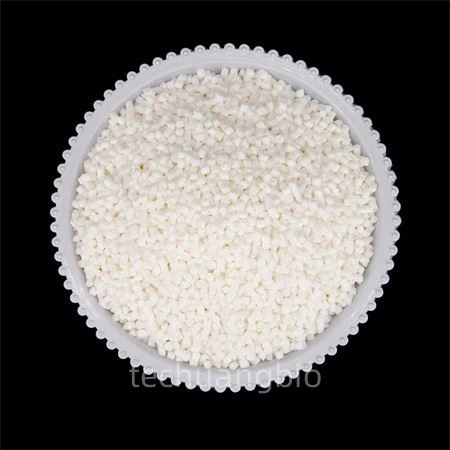
In addition to surface energy and compatibility, the processing conditions also play a role in PBAT's adhesion properties. The temperature, pressure, and processing time during manufacturing can affect the adhesion of PBAT to other materials. For example, if the processing temperature is too high, it may cause the PBAT to degrade, which can reduce its adhesion strength. On the other hand, if the processing temperature is too low, the PBAT may not flow properly, resulting in poor adhesion.
Now, let's talk about some of the applications where PBAT's adhesion properties are particularly important. One of the most common applications of PBAT is in flexible packaging. PBAT is often used to make biodegradable bags, pouches, and films for food packaging. In these applications, good adhesion is essential to prevent the package from leaking or opening during storage and transportation. PBAT's adhesion properties also help to keep the package sealed, which can extend the shelf life of the food.
Another application where PBAT's adhesion properties are crucial is in agricultural films. PBAT is used to make mulch films, greenhouse films, and silage films. These films need to adhere well to the soil or other surfaces to prevent them from blowing away or being damaged by wind or rain. Good adhesion also helps to maintain the integrity of the film, which can improve the efficiency of agricultural operations.
PBAT is also used in the production of nonwoven fabrics. Nonwoven fabrics made from PBAT are used in a variety of applications, such as hygiene products, medical supplies, and filtration materials. In these applications, good adhesion is necessary to ensure that the fibers in the nonwoven fabric are held together firmly. This can improve the strength and durability of the nonwoven fabric.
As a supplier of Biodegradable Material, I understand the importance of PBAT's adhesion properties. That's why we offer a range of PBAT products with different adhesion characteristics to meet the specific needs of our customers. Whether you're looking for a PBAT product with high adhesion strength or one that's easy to process, we can help you find the right solution.
We also offer technical support and advice to our customers to help them optimize the adhesion properties of our PBAT products. Our team of experts can provide guidance on surface treatment methods, additive selection, and processing conditions to ensure that you get the best results.
If you're interested in learning more about PBAT's adhesion properties or if you have any questions about our PBAT products, please don't hesitate to contact us. We'd be happy to discuss your requirements and help you find the right solution for your application. Whether you're a packaging manufacturer, an agricultural company, or a nonwoven fabric producer, we can provide you with the high-quality PBAT products and support you need to succeed.
In conclusion, PBAT's adhesion properties are an important factor in its performance in various applications. By understanding the factors that affect PBAT's adhesion and using the right processing techniques and additives, manufacturers can achieve good adhesion and create high-quality products. As a supplier of PBAT PLA Corn Starch and other biodegradable materials, we're committed to providing our customers with the best products and support to help them meet their sustainability goals. So, if you're looking for a reliable supplier of biodegradable materials, look no further. Contact us today to start a conversation about your needs.
References
- "Biodegradable Polymers: Principles and Applications" by Andrew L. Andrady
- "Polymer Blends and Composites for Packaging Applications" by Anil K. Bhowmick and H. L. Stephens
- "Adhesion Science and Engineering: Surfaces, Chemistry, and Applications" edited by K. L. Mittal