

Hey there! As a supplier of biodegradable polymers, I'm super stoked to chat about the awesome biodegradable polymers used in smart materials. Smart materials are those cool substances that can change their properties in response to external stimuli like temperature, light, or pressure. And biodegradable polymers play a huge role in making these materials not only smart but also eco - friendly.
Let's start with Polylactic Acid (PLA). It's one of the most well - known biodegradable polymers out there. PLA is derived from renewable resources like corn starch or sugarcane. It's got some really neat features that make it a great choice for smart materials. For instance, it has good mechanical properties, which means it can be used in applications where some strength is required. In smart packaging, PLA can be used to create containers that can sense changes in the environment inside the package. If the temperature rises too much, the PLA - based smart material might change its structure to release a preservative or give a visual signal that the contents might be going bad.
You can check out more about the combination of PBAT and PLA and corn starch over at PBAT PLA Corn Starch. This combo is often used to enhance the properties of each polymer. PBAT, or Polybutylene Adipate Terephthalate, is another biodegradable polymer. It has excellent flexibility and toughness. When blended with PLA, it can improve the brittleness of PLA, making the resulting smart material more durable.
In the field of smart textiles, biodegradable polymers are making waves. PLA can be spun into fibers and used to create clothing that can adapt to the wearer's body temperature. When it gets hot, the fibers might change their structure to allow more air circulation, keeping the wearer cool. And since it's biodegradable, once you're done with the clothes, they won't sit in landfills for centuries.
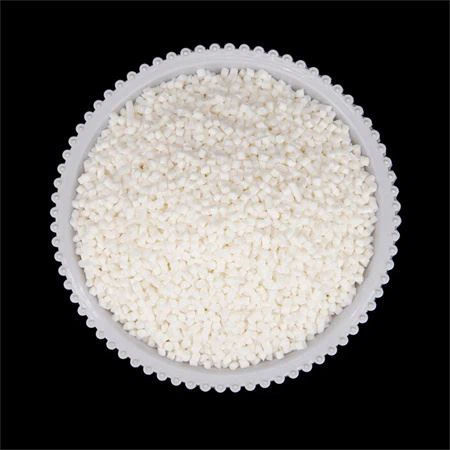

Another interesting biodegradable polymer is Polyhydroxyalkanoates (PHA). PHAs are synthesized by microorganisms from renewable carbon sources. They have a wide range of properties depending on their composition. Some PHAs are very elastic, while others are more rigid. In smart medical devices, PHAs can be used to create implants that can degrade over time in the body. For example, a PHA - based smart stent can gradually release drugs as it breaks down, providing a long - term treatment for blocked blood vessels.
If you're interested in more general biodegradable resin, head over to Biodegradable Resin. There you can find a whole bunch of info on different types of resins that can be used in various smart material applications.
Now, let's talk about how these biodegradable polymers are processed to make smart materials. One common method is extrusion. In extrusion, the polymer is melted and forced through a die to create a specific shape, like a film or a fiber. This is a great way to mass - produce smart materials for different industries. Injection molding is another popular technique. It's used to create complex shapes with high precision. You can make small, intricate smart sensors using injection molding with biodegradable polymers.
The use of biodegradable polymers in smart materials also has a big impact on the environment. Traditional polymers are often made from non - renewable fossil fuels and can take hundreds of years to break down. In contrast, biodegradable polymers can decompose naturally in the environment, reducing the amount of plastic waste. This is a huge win for our planet.
In the automotive industry, biodegradable polymers are starting to be used in smart components. For example, a biodegradable polymer - based sensor can be used to monitor the tire pressure. As the tire wears or the temperature changes, the sensor can send a signal to the car's computer, alerting the driver. This not only improves safety but also helps in reducing the environmental impact of the automotive industry.
Let's not forget about the electronics industry. Biodegradable polymers can be used to create flexible and printable electronics. Imagine a smart phone screen that's made from a biodegradable polymer. Once you upgrade your phone, you can just toss the old screen in the compost, and it'll break down harmlessly.
The combination of PBAT and PLA is also worth a deeper look. You can find more details at Pbat And Pla. This blend can be used in 3D printing to create smart objects. 3D printing with biodegradable polymers allows for the creation of custom - designed smart parts with complex geometries.
As a supplier of biodegradable polymers, I've seen firsthand the growing demand for these materials in the smart materials industry. Companies are realizing the benefits of using eco - friendly polymers in their products. Not only do they meet the increasing environmental regulations, but they also appeal to consumers who are more conscious about the environment.
If you're in the business of developing smart materials and are looking for high - quality biodegradable polymers, I'd love to have a chat with you. Whether you're working on a small - scale project or a large - scale industrial application, I can provide you with the right polymers to meet your needs. Just reach out, and we can start discussing how we can work together to create innovative and sustainable smart materials.
References
- Albertsson, A. - C., & Varma, I. K. (2002). Degradable aliphatic polyesters. Progress in Polymer Science, 27(6), 1023 - 1079.
- Chen, G. Q., & Wu, Q. (2005). The application of polyhydroxyalkanoates as tissue engineering materials. Biomaterials, 26(30), 5827 - 5840.
- Lunt, J. (1998). Large - scale production, properties and commercial applications of polylactic acid polymers. Polymer Degradation and Stability, 59(1 - 3), 145 - 152.